

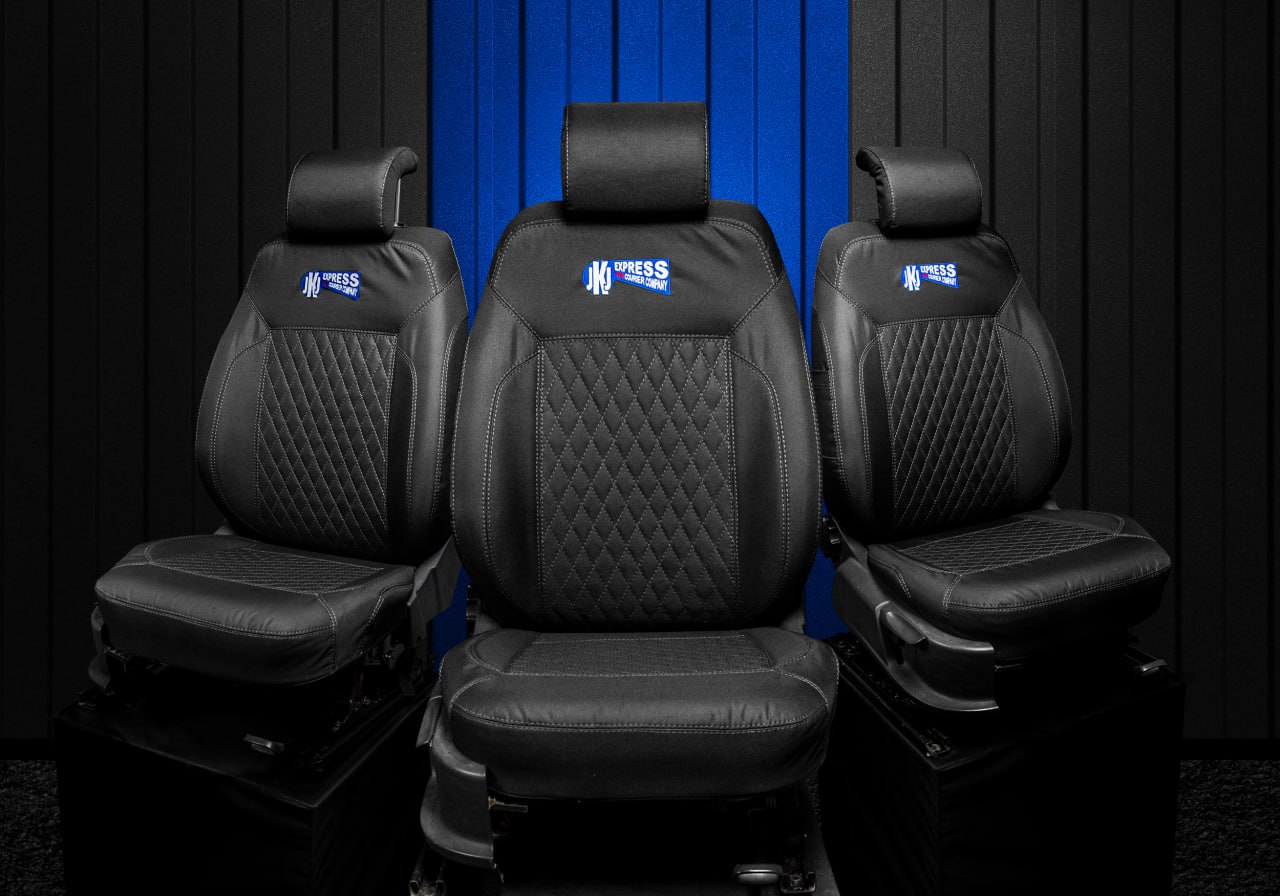
Workshop runner vehicle seat covers help protect seats in service runners, parts-delivery vans and dealership utility vehicles that make frequent short trips. Drivers climb in with tools, paperwork and dusty workwear, then move between a workshop, supplier and customer. A suitable cover should fit the exact seat, remain secure through repeated entry and exit, and suit the fleet’s cleaning routine.

Why workshop runner seats wear quickly
Constant entry and exit creates repeated friction across seat bases and outer bolsters. Parts handling, work clothing and equipment can bring grit, oil residue or moisture into the cabin. Many workshop and delivery vehicles are cleaned quickly between jobs, so debris and small spills may be missed. Over time, original upholstery can look tired even when the vehicle is maintained and mechanically sound.
Seat protection is one part of managing a working vehicle. Covers can help reduce direct contact with everyday dirt and abrasion, but they do not replace cleaning, inspection or care of the vehicle. Consider how the vehicle is used before selecting a material or finish.
Match the cover to the vehicle and its work
Before ordering workshop runner vehicle seat covers, record the make, model, year, trim and seat layout. Note separate or split benches, headrests, armrests, seat controls, belts and airbag locations. Seat designs can change between model years or trim levels, so provide clear photographs and ask the supplier to confirm the pattern for each vehicle.
Then look at the route and workday. A parts-delivery van visiting customers may need a tidy finish alongside practical protection. A workshop runner spending most of its day around a service bay may need a different cleaning routine. Well-specified workshop runner vehicle seat covers can support a consistent fit and maintenance process when details are recorded. Consider driver turnover, passengers, tools carried and whether vehicles are shared between shifts. A fleet may need more than one approved option if its vehicles have different seats or duties.
What to look for in workshop runner vehicle seat covers
- Vehicle-specific fit: Match the cover to the precise seat configuration for consistent coverage and a neat appearance.
- Secure placement: Correct fitment helps limit shifting and bunching when drivers get in and out throughout the day.
- Practical care: Choose a material and finish that suit typical dirt and the cleaning methods approved for that material.
- Appropriate coverage: Consider which seat areas receive the most contact, especially outer edges and frequently used passenger seats.
- Professional presentation: Consider how the cabin looks to customers, suppliers and workshop visitors.
Do not choose on a broad label such as “heavy duty” alone. Confirm the material, fit, care instructions and suitability for the actual seat and vehicle use. For wider fleet planning, see our guide to standardising seat covers across a fleet.
Check safety features and fitment carefully
Seat covers must allow normal access to belts, buckles, headrests, adjustment controls and other seat features. If a seat has a side airbag, use a cover specifically designed and confirmed as compatible for that vehicle. Never cover, alter or obstruct an airbag seam, belt buckle or safety control. Follow the vehicle manufacturer’s guidance and ask a qualified fitment provider to check anything uncertain.
After installation, check that the cover is secure and does not interfere with seating position, seat movement, belt access or controls. Drivers should report a cover that shifts, loosens or becomes damaged rather than attempting an improvised repair. For general seat-belt safety information, see Arrive Alive’s seat-belt guidance.
Make care part of the daily routine
Simple habits help keep a shared cabin manageable. Remove loose debris, report spills or damage, and leave the vehicle ready for the next driver. At the depot, follow the care instructions supplied for the cover material; different finishes may need different cleaning methods. Avoid harsh products unless the supplier’s care guidance says they are suitable.
- Check the cover is fitted securely during routine handovers.
- Remove grit and debris before they work into seams or seat areas.
- Use the recommended cleaning method and let the cover dry as directed.
- Record damage, repairs and replacement details with the vehicle’s fleet record.
Keep the approved pattern, material, colour, fitment notes and care instructions together. That record makes future orders easier to coordinate when vehicles or staff change. It also helps a manager distinguish between a cover that needs cleaning and one that needs professional attention.
Plan a consistent workshop and delivery fleet
Review the specification when a vehicle is replaced, a seat is modified or inspection records show repeated fitment problems. Check whether the selected cover still suits the route, shared-driver pattern and cleaning routine. If your fleet includes vehicles with different seat designs, list the groups separately instead of assuming one pattern will fit all.
Stealth Seat Covers manufactures custom-fit covers for South African vehicles, with fitment available at its Polokwane premises. Businesses in Limpopo and elsewhere can share vehicle details and seat photos to discuss options for service runners and parts-delivery vans. Contact Stealth Seat Covers for pricing and fitment enquiries.
Frequently asked questions
Which details are needed to order workshop runner vehicle seat covers?
Provide the vehicle make, model, year, trim, seat layout and clear seat photos. Include details about headrests, armrests, belts, controls and airbag locations.
Are custom-fit covers suitable for parts-delivery vans?
They can be considered when the pattern matches the exact seat and the cover is compatible with its safety features. Confirm fitment before ordering.
How should a fleet clean its seat covers?
Follow the care instructions for the specific material. Do not assume one cleaning product or method is suitable for every cover.
Can a cover interfere with an airbag or seat belt?
It can if it is unsuitable or fitted incorrectly. Use a cover confirmed for that seat and keep airbag seams, belts, buckles and controls unobstructed.