


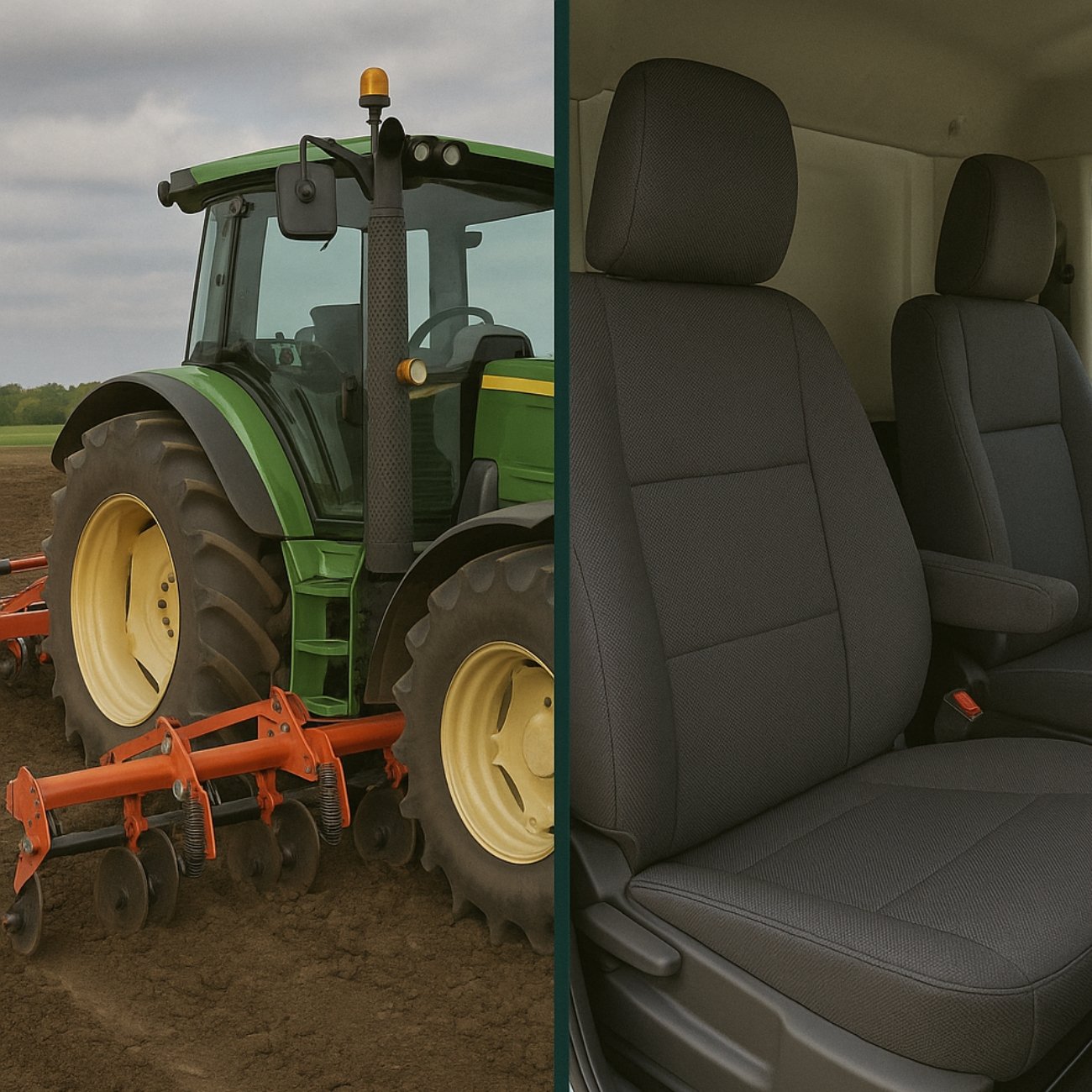
Seat covers for agricultural vehicles used in inspection, irrigation and support work should match the reality of moving between fields, pump stations, farm roads and yard areas. Crews may return with wet clothing, mud or dust, then need the vehicle for another task soon after. The right cover helps protect high-contact upholstery while keeping cleaning and handovers manageable.
Why agricultural support vehicles need attention
Inspection and irrigation vehicles may seem less demanding than primary farm bakkies, but their cabins see repeated entry and exit, changing weather and workwear transfer. Seat bases and driver bolsters collect friction, while damp clothing and grit can leave marks or work into seams. Shared use makes wear harder to predict.
These vehicles also play a practical role in keeping farm operations moving. A cover should suit the way the seat is used and cleaned, not only the vehicle’s label. Confirm the material’s care guidance and choose a fit that remains orderly through regular use.
What to check in seat covers for agricultural vehicles
- Fit the exact seat: Confirm make, model, year, cab and seat layout, including headrests, armrests and split benches.
- Consider moisture and dirt: Ask how wet clothing, soil and dust should be cleaned from the material.
- Review wear areas: Check protection around seat bases, bolsters and backrests where field teams make repeated contact.
- Match the care routine: Choose a cover the team can maintain with the available cleaning time and approved products.
- Check safety features: Ensure belts, controls and any side airbags remain accessible and functional.
- Think about shared use: Consider who drives each vehicle and how the seat is inspected during handover.
Match covers to the farm task
An irrigation support vehicle may regularly visit pump sites and wet areas, while an inspection vehicle may travel long distances across a farm or between properties. Group vehicles by seat design and exposure before standardising a cover specification. This helps teams choose protection that matches actual conditions instead of treating every vehicle the same.
Seat covers for agricultural inspection vehicles should also work with how crews use the cab. If staff carry tools, samples or paperwork, keep those items in suitable storage and avoid leaving loose or sharp objects on the seat. Covers protect against ordinary contact but do not replace safe equipment handling.
Why fit and installation matter on rough routes
Farm roads and frequent stops increase the number of times people get in and out. A loose universal cover can shift, bunch or expose the areas that take the most wear. A custom-fit design is shaped for the specified seat and can remain more controlled when installed properly.
Provide accurate vehicle details and mention split benches, integrated headrests, armrests and seat-mounted controls. Confirm how the cover fits around belts and airbags before installation, then check that it stays in place and that seat features still work normally.
Build a simple cleaning and inspection routine
Remove loose debris, wipe routine marks using approved methods and follow the cover’s drying guidance after wet use. Keep care instructions where drivers can find them, and have crews report damaged seams, persistent marks or a shifted fit. A short seat check during vehicle handover can prevent small issues from being missed across shifts.
Clean mud or grit promptly rather than rubbing it into the surface. Avoid harsh chemicals or soaking unless the manufacturer confirms the method is suitable for the material.
Select seat covers for agricultural support fleets by route
Seat covers for agricultural inspection vehicles should reflect how far and how often teams travel, the surfaces they sit on and the time available between jobs. A vehicle visiting irrigation sites may face damp clothing and occasional splashes, while an inspection bakkie may spend long periods on dusty farm roads. Record those differences before choosing one specification for a group.
Where vehicles have similar seats but different duties, keep the seat pattern consistent only if fitment is confirmed; choose care guidance and material options according to the work. For farms in Limpopo or elsewhere in South Africa, local routes and seasonal conditions vary. Ask drivers which seat areas collect the most grit or show wear, then check those areas during inspections.
Confirm the seat details before ordering
List the make, model year, cab type and exact seat layout for each vehicle. Note split benches, integrated headrests, armrests, suspension seats and controls, and include clear photographs where possible. A model badge does not confirm that every trim level has the same seats. When ordering seat covers for agricultural vehicles, ask the supplier to match the pattern to the actual seat and record any exceptions in the fleet register.
For a multi-vehicle rollout, fit a representative unit first. Check that the cover stays in place during normal entry and exit, that seat adjustments work, and that belts and seat-mounted safety features remain accessible. Follow the vehicle manufacturer’s information and the supplier’s fitting directions before completing the rest of the group.
Track cleaning, wear and replacement
Keep the approved cleaning method with the vehicle or in the team’s maintenance notes. Remove loose soil before wiping, treat marks using the product guidance and allow the material to dry as instructed. Avoid harsh chemicals or soaking unless the supplier confirms they are suitable. A short handover check can record dampness, loose sections, seam wear or damage caused by regular work.
When evaluating seat covers for agricultural support work, use those inspection records to decide whether a concern is limited to one seat or affects a group. Store the cover reference, vehicle details and installation date so replacements can be matched accurately. Covers can protect upholstery from routine contact; store tools and liquids securely and maintain the vehicle as usual.
For broader workplace procedures, consult South Africa’s Occupational Health and Safety Act and the requirements that apply to your operation.
Frequently asked questions
Do irrigation vehicles need waterproof covers?
Consider the amount of moisture the vehicle actually encounters, but also review comfort, cleaning guidance, fit and durability before choosing a material.
Can one specification suit inspection and support vehicles?
It can if the vehicles have compatible seats and similar working conditions. Check the actual cab and seat layout for each model.
How can farm teams keep covered seats clean?
Follow the supplier’s care instructions, remove loose soil and deal with marks promptly using approved methods.
Will covers protect seats from tools and equipment?
They help protect from routine contact, but tools and liquids should be stored securely in the vehicle’s cargo area.
Choose protection that works across the farm day
The best seat covers for agricultural inspection, irrigation and support vehicles balance secure fit, everyday protection and realistic care. Match the cover to the seat and work pattern, confirm safety compatibility and give crews clear handover steps. This helps maintain the cabin through the repeated farm tasks that put pressure on seat upholstery.
For vehicle-specific advice, contact Stealth Seat Covers with the make, model, year and seat details.