


Long-haul truck drivers spend extended periods in the cab, while daily freight fleets move through repeated loading stops, depot visits and changing weather. The best seat covers for long-haul truck drivers need to balance secure fit, comfort, practical cleaning and protection for usable original upholstery. A cover that feels uncomfortable, shifts during a shift or is difficult to maintain can become a daily nuisance.
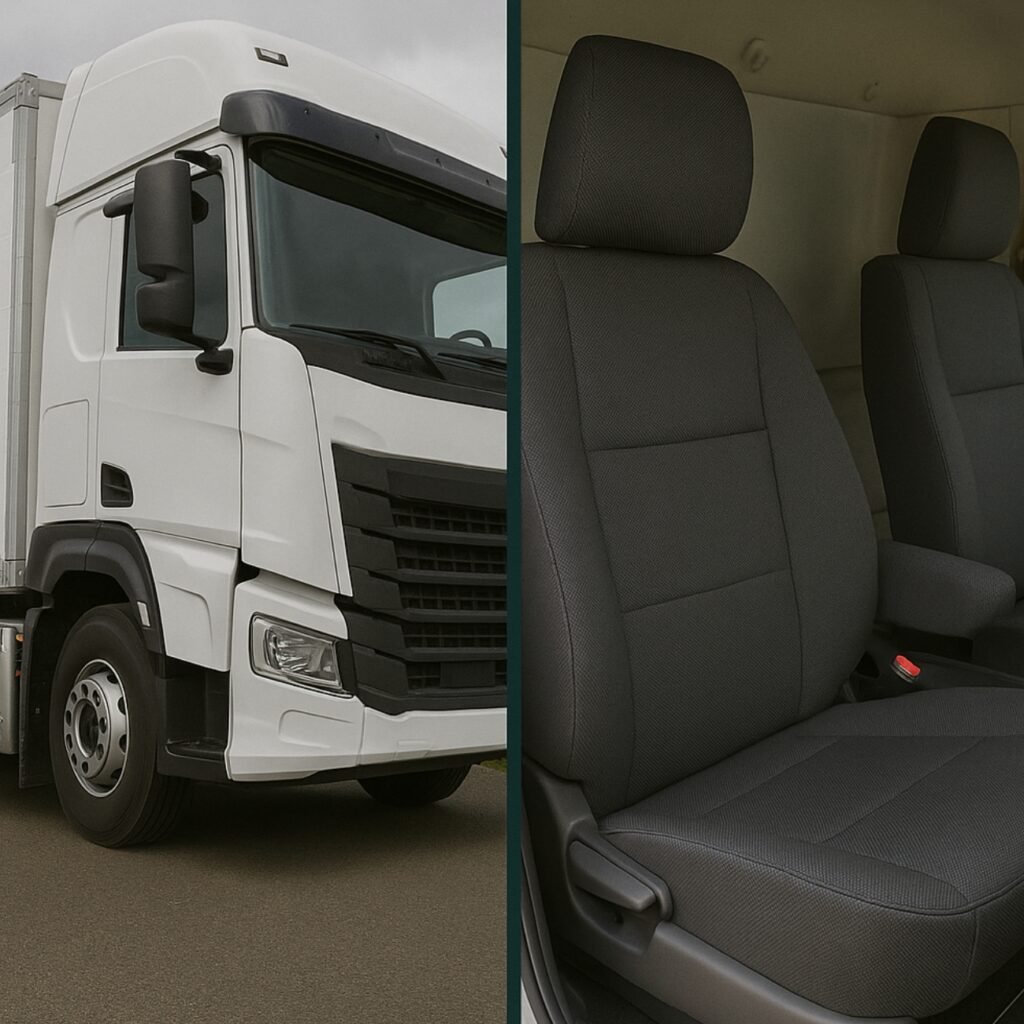
Start with the exact truck seat and how the vehicle is used. Tractor units, rigid trucks and different model years can have distinct seat shapes, headrests, armrests and controls. A custom-fit option should match the specified seat and allow normal access to belts and adjustments.
Consider the driver’s full shift
For a truck used across long shifts, feel matters alongside durability. Drivers spend hours in the same seat, so a material that feels too hot, slippery or rough may be unsuitable for that cab and climate. Discuss the available material options with drivers where possible, and consider how the seat behaves during both driving and frequent entry and exit.
Seat covers do not improve a damaged seat mechanism or replace a correctly adjusted driver’s seat. Check the original seat condition first. If the foam is compressed, the upholstery is torn or a control is faulty, arrange a separate assessment before fitting a cover.
Choose a material that suits freight work
Daily freight vehicles may face dust from depots, sweat, food or drink spills, and routine friction from work clothing. Choose a material based on the actual cleaning routine and presentation standard, not just a general “heavy-duty” label. Ask how to clean the selected option and whether it is suited to the expected exposure. Follow the supplier’s care instructions rather than assuming all truck seat covers tolerate the same cleaners or moisture.
For a mixed fleet, it may be practical to set a standard for each seat type or vehicle group. Record the approved material, cleaning instructions and replacement process so workshop teams and drivers have a consistent reference. The result should be easy to inspect and maintain between scheduled services.
Fit matters on every truck model
A universal cover may not match every truck seat. Loose fabric can shift, bunch or leave high-contact sections exposed. Before requesting a quote, provide the truck make, model, year and clear seat photographs. Include details such as suspension seats, integrated headrests, armrests, seat splits, lumbar controls or modifications.
Once installed, check that seat belts buckle and retract correctly, adjustments remain accessible and any seat-mounted safety equipment functions normally. Inspect the cover for movement after the first use and retension or refit it according to the instructions. Correct fit supports a tidy cabin and makes routine wipe-downs less awkward.
Support a practical fleet cleaning routine
Make cab cleaning part of the normal vehicle handover. Remove loose grit before wiping, deal with spills promptly using an approved method, and allow the seat to dry as directed. Drivers can report seam damage, loose fasteners or moisture trapped beneath the cover before a small issue becomes harder to manage.
For long-distance routes, a compact cleaning kit with the supplier-approved cloth or product can help drivers keep the seat in reasonable condition between depot cleans. Avoid unapproved solvents or excessive water, especially around seams and seat controls. Track recurring wear patterns across the fleet; if the same area fails repeatedly, review the fit, seat model or material choice.
Long-haul truck drivers: checks for a dependable cab setup
For long-haul truck drivers, a quick cab check helps confirm that the seat remains comfortable to use and that safety-related features are unobstructed. Inspect the cover at the start of a work period and after cleaning or adjustments. If it has shifted, refit it as directed before the vehicle goes back into service.
- Confirm the seat and cover are secure, with no loose fabric near controls.
- Check that belts are easy to reach, buckle and retract as designed.
- Move the seat through its normal adjustment range and check for interference.
- Report a damaged seam, fastening or seat mechanism for separate assessment.
- Use only the cleaning method approved for the selected cover material.
For general context, the South African seat-belt regulations set requirements for seat belts in vehicles. A cover must not prevent the belt or seat equipment from working normally; follow the truck manufacturer’s instructions for the specific seat and cab.
Fleet managers can record each truck’s seat type, cover material, fitting date and care notes. That makes it easier to spot repeat movement or wear and to order a matching replacement. Long-haul truck drivers should also have a clear way to report fit concerns, so workshop staff can inspect the cover rather than relying on drivers to make improvised changes.
Plan cover fit across a mixed truck fleet
Long-haul truck drivers may work in different cabs even when the trucks are part of one freight operation. List each make, model, year and seat configuration before treating vehicles as a single group. Compare seat photographs and note armrests, suspension, controls and headrests. Group only seats that genuinely match, then confirm fit and care instructions for each group before placing repeat orders. This simple record helps avoid mixing covers that look similar but do not fit the same seat.
Frequently asked questions
What seat-cover features matter most for long-haul drivers?
Secure fit, a comfortable feel, accessible controls and a cleaning routine that suits the cab’s actual conditions are all important. The right balance depends on the truck and driver.
Should every truck in a freight fleet get the same cover?
Use one standard where seat shapes and operating conditions match. Different truck models or seat configurations may require different patterns or materials.
Can seat covers help keep a truck cab presentable?
They can help shield usable original upholstery from routine dirt and friction. Regular cleaning is still needed, and a cover will not repair existing seat damage.
What should I send for a truck seat-cover quote?
Provide make, model, year, seat photographs and details of armrests, controls, headrests and modifications. Explain route conditions and how the cab is cleaned.
Truck seat covers for South African freight fleets
Stealth Seat Covers makes custom-fit covers for South African freight vehicles, with fitment at its Polokwane premises. Review the seat-cover range and contact Stealth Seat Covers with your truck details, seat photographs and fleet requirements. Gauteng operators should confirm fitment arrangements before travelling.
Featured image credit: Bob Adams, “Highway Junkie” Freightliner Argosy, licensed under CC BY-SA 2.0. The image has been resized for display.