

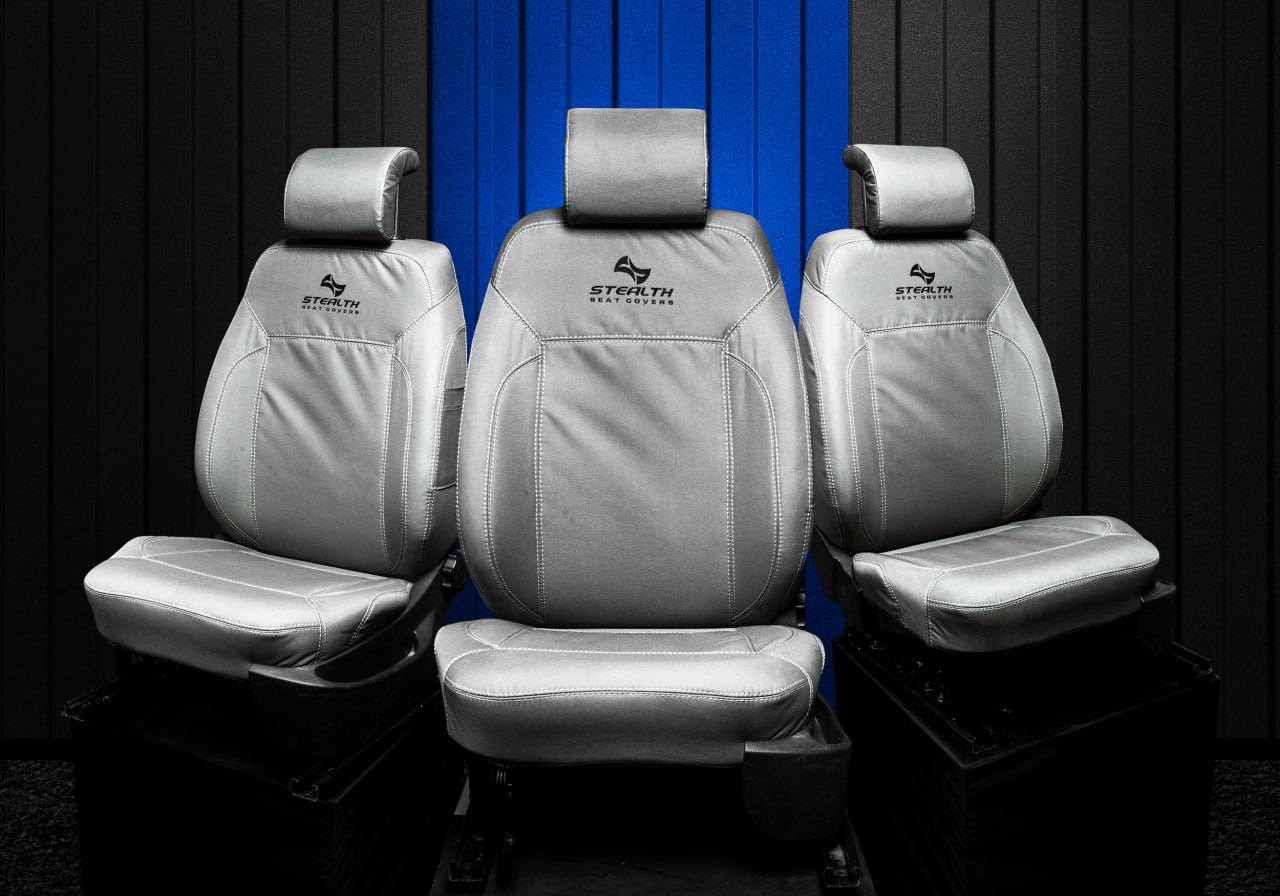
Protect seats in vehicles carrying PPE, wet clothing and dirty gear by matching custom-fit covers to the daily work. Vehicles used by field teams carry dusty PPE, muddy overalls and gloves between jobs. Bakkies, service vans and site support vehicles can quickly develop stained seats and worn bolsters when gear is loaded or people climb in and out throughout the day. Protecting seats in vehicles carrying PPE starts with understanding what reaches the cabin, how the vehicle is used and how often the interior can be cleaned.

Why work gear affects seat condition
To protect seats in vehicles carrying PPE, teams should consider what enters the cab at the start and end of each shift. Wet overalls, muddy boots and dusty equipment can transfer moisture and grit onto seat surfaces during repeated trips.
Moisture can bring grit into contact with upholstery, while repeated movement against the seat increases abrasion. Dusty uniforms and equipment add contamination, and shared vehicles may see several shifts of use before a detailed clean. The seat base, bolsters and outer edges often show wear first. A suitable cover can help shield these high-contact areas and make it easier to keep the cabin presentable.
Protect seats in vehicles during shift changes
When drivers share a bakkie or van, seats may be exposed to several work crews before there is time for a full clean. A simple handover routine helps protect seats in vehicles used across changing shifts: shake loose dust from clothing outside the cab when practical, keep dirty gear in a designated storage area and report spills promptly.
Match protection to the work
Make a simple assessment of the fleet: what types of gear are carried, whether clothing is often wet or muddy, how frequently seats are cleaned, and whether vehicles visit customer sites. A maintenance bakkie working in muddy field conditions may need a tougher, easy-care surface than a supervisor vehicle used mostly on public roads. If drivers share vehicles, plan for the extra entry, exit and cleaning cycles.
Set a reasonable interior routine as well as choosing covers. Shake dust from PPE outside the cabin when practical, use storage for dirty equipment and wipe down affected areas regularly. Covers support this routine but do not replace sensible gear handling or seat care.
Consider material and cleaning needs
Protect seats in vehicles carrying PPE by choosing a surface and care method that match the actual work. Ask how to remove mud, moisture and common marks without damaging the cover. Follow the product instructions and avoid assuming that a surface is waterproof or safe for harsh chemicals unless its specifications say so.
For a fleet using several cover types, keep the approved cleaning instructions with the vehicle or at the depot. That helps seasonal staff and relief drivers protect seats in vehicles without guessing at the right products or method.
A durable surface that can be cleaned in line with its care instructions is useful where contamination is frequent. Technical fabrics may suit repeated abrasion and dusty work, while polyester-based choices can offer practical value when a business needs consistency across several vehicles. A leather-style finish may suit vehicles where presentation matters, but confirm that it also works for the team’s conditions and maintenance capacity. Avoid assuming that any fabric is waterproof or suitable for harsh cleaning; follow the product’s actual specifications.
Why fit matters as much as the surface
A loose cover can move when wet or dirty clothing slides across it, leaving vulnerable areas exposed. Custom-fit covers are made for the seat shape and can provide more consistent coverage. Before ordering, confirm the vehicle make, model, year and seat features, including headrests and armrests. For mixed vehicle groups, record these details so the covers fit correctly and future replacements are easier to manage.
Set up storage and inspection habits
Keep hard tools, wet PPE and loose equipment secured so they do not slide against seat backs or bolsters. A basic divider, storage box or designated cargo area can reduce contact between gear and upholstery. During scheduled checks, inspect seams, straps and high-contact areas for wear or movement, then correct fit issues early.
Common mistakes with dirty gear
- Relying on towels or temporary throws that leave parts of the seat uncovered.
- Choosing a material without checking its care instructions or suitability for the actual work.
- Assuming a cover alone will keep the cabin clean without a simple cleaning routine.
- Buying a universal fit without confirming whether it stays in place on the seat.
Businesses can make the process more consistent by noting vehicle roles, seat configurations, cleaning needs and cover specifications. For broader fleet applications, see fleet and commercial seat covers.
Fitment, safety and fleet records
Before ordering, note the vehicle make, model, year and seat layout, including headrests, armrests and other features. Confirm that seat controls, belts and safety features remain accessible and work as intended after installation. Keeping the fitment details on file makes it easier to protect seats in vehicles when replacements are needed later.
Include general vehicle condition in planned checks. The South African government roadworthiness testing guidance explains the wider testing process.
Frequently asked questions
Why do wet uniforms affect seats so quickly?
Moisture can carry grit into the upholstery, and repeated rubbing under pressure may speed up staining and visible wear.
Are towels enough to protect work seats?
They may help temporarily, but they rarely cover the entire seat securely and can look untidy in a shared work vehicle.
What matters more: the material or the fit?
Both matter. The surface should suit the conditions, while a secure fit helps prevent shifting and uncovered wear areas.
How often should work vehicles be cleaned?
Vehicles exposed to frequent dirt and moisture benefit from regular light cleaning, following the care guidance for the cover and vehicle interior.
Keep working cabins easier to maintain
When PPE, dirty gear and wet clothing are part of the job, seat protection should suit the daily workload and cleaning routine. Choose an appropriate material, confirm the fit and keep simple gear-handling habits in place. For pricing, fitment advice or help selecting a suitable specification, contact Stealth Seat Covers.