

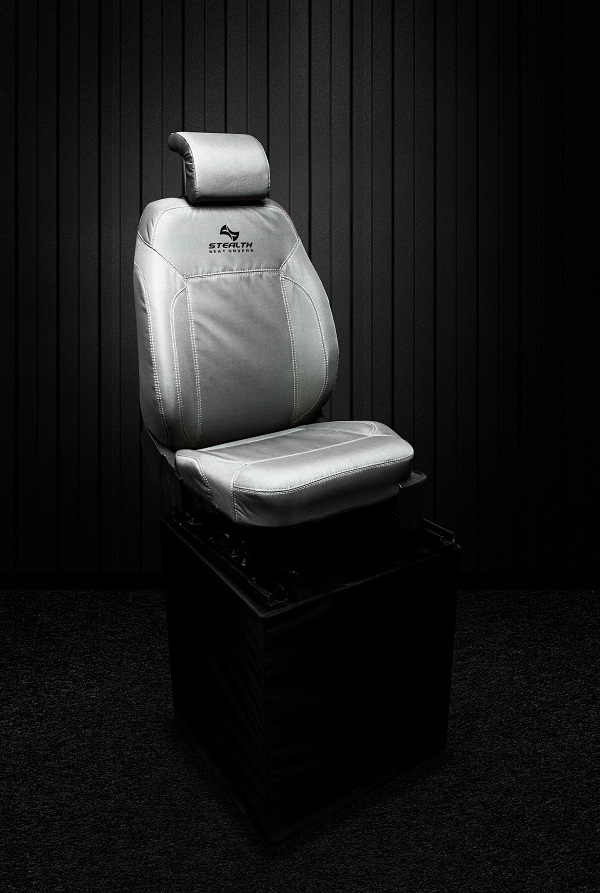
Seat covers for fuel service vehicles need to handle greasy clothing, workshop grime, repeated entry and quick clean-ups. Fuel bowsers, lubricant support vehicles, mobile service bakkies and on-site vans move through refuelling bays, depots, mines, workshops and industrial routes. Their seats absorb daily wear long before a fleet manager sees it in a maintenance report.
For fleet supervisors, workshop managers and service teams, the right cover helps protect high-contact areas, keep cabins presentable between jobs and support a consistent standard across working vehicles. The best choice depends on the real workload, cleaning routine and vehicle role.

Why support-vehicle seats wear quickly
Seat covers for fuel and service vehicles should account for more than visible dirt. Drivers may move between a refuelling area, workshop and customer site, bringing different residues and workwear into the cab. Shared vehicles also experience different cleaning habits, so the cover and handover routine need to be simple enough for each team to follow.
Drivers and technicians climb in and out throughout the day, often wearing work clothes that carry dust, grease or moisture. Shared vehicles add more use, while tools and service materials bring extra dirt into the cabin. The seat bolsters, bases and backrests can become stained, flattened or scuffed. When cleaning time is short, unprotected fabric can make a vehicle look neglected even when it is mechanically sound.
A cleaner, better-kept interior also supports driver morale and the professional image a business presents at customer sites. Protecting seats early is simpler than trying to restore worn upholstery later.
Set a practical cleaning routine for fuel service vehicles
Seat covers for fuel support vehicles are easier to manage when teams remove loose debris before wiping and treat spills using the material’s care instructions. Avoid unapproved chemicals or cleaning tools that may damage the surface. A short post-shift reset can help keep the cabin ready for the next driver without turning each handover into a full clean.
Where several vehicles return to one depot, keep approved products and cleaning guidance in a shared location. Record recurring issues such as exposed seat edges, shifting covers or stains so managers can address the cause rather than repeatedly cleaning the same area.
Choose covers around the work
Before selecting seat covers for fuel support work, compare the typical residue, route, shift length and cleaning facilities for each vehicle group.
Start with how each vehicle is used. Is it assigned to one driver or shared by a team? Does it spend most of its time on public roads, in workshops or on industrial sites? How often can the cabin be cleaned, and does the vehicle meet customers? Those answers guide the material, finish and fit more reliably than choosing by appearance alone.
Riptech-style heavy-duty materials are a practical direction for tough support work because the surface can better suit abrasion, repeated sliding and routine wipe-downs. Technical fabrics may make sense for dusty, high-use vehicles where durability matters. Synthetic polyester options can suit value-conscious fleets that need a consistent specification across several vehicles. A leather-style finish may suit a customer-facing unit when presentation is important, provided the choice still fits the working conditions.
There is no single material that fits every mixed fleet. Set a standard for the vehicle groups that do similar work, then record exceptions where a role needs a different level of protection or finish.
Why custom fit matters
Fuel service vehicles may have different seat layouts even when they share a similar body style. Confirm the make, model, year and seat configuration before ordering. After fitting, check that belts, controls and safety features remain accessible and work as intended, then recheck the cover after normal use.
Loose universal covers can shift, bunch up and leave the areas that take the most wear exposed. They can also make a hard-working cab look untidy. A tailored cover is made around the seat shape, allowing it to sit more securely and protect high-contact areas more consistently.
Before ordering, confirm each vehicle’s make, model, year and seat configuration, including headrests, armrests and other fitted features. If a fleet contains several vehicle types, group matching seats together and identify exceptions clearly. Accurate details help prevent fitment delays and reduce the risk of a cover that does not suit the seat.
Common purchasing mistakes
Seat covers for fuel service vehicles should be selected for the actual operating conditions, not only the vehicle’s title or appearance. A fuel bowser working at a depot may need a different balance from a customer-facing lubricant service van.
Choosing only on the initial price can overlook cleaning effort, fit stability and replacement frequency. A low-cost cover that moves, traps dirt or wears out quickly may be a poor value over time. Another mistake is treating every commercial vehicle as identical. A bowser, mobile workshop bakkie and customer-facing service van can have different requirements even when they belong to the same fleet.
Also consider the care routine before selecting a material. A cover that is easy for the team to wipe or clean between jobs may save time and help keep the cabin ready for the next shift.
Plan a consistent fleet standard
Fuel, lubricant and service support vehicles can be grouped by duty and seat configuration. Keep a record of the selected cover, fitment details, cleaning guidance and installation date so future orders match the right vehicle. This also helps managers set a consistent cabin standard across different sites.
Include general vehicle condition in the planned maintenance programme. The South African government roadworthiness testing guidance provides general information about testing.
List the vehicles, their seat layouts, typical work and cleaning needs. Choose a suitable material direction for each group and note any exceptions. This gives the business a clearer basis for ordering replacements and applying the same standard when vehicles are added to the fleet.
For broader business applications, explore custom fleet and commercial seat covers. The right custom-fit solution should match the vehicle’s daily conditions, provide practical protection and keep its cabin looking ready for work.
Frequently asked questions
What matters most for fuel and service support vehicles?
Durability, secure fit and practical cleaning usually matter more than a luxury finish. The best specification reflects the grime, abrasion and frequency of use each vehicle experiences.
Is leather always the best option?
No. A leather-style finish can look refined, but heavy-use or greasy environments may call for a surface that better suits frequent wipe-downs and abrasion.
Why choose custom-fit instead of universal covers?
Custom fit helps the cover stay aligned with the seat and protect its high-wear areas. A loose cover can shift or bunch and may leave vulnerable sections exposed.
Can a mixed service fleet use one standard?
A fleet can use a consistent overall approach while allowing for different vehicle roles. Group similar seats and workloads together, then document any units that need a different material or finish.
Protect the cabin for the next shift
For seat covers for fuel service vehicles, a secure fit and routine that drivers can maintain are the foundation of effective interior protection.
Seat covers for fuel service vehicles need the same practical selection and care as other critical work equipment. Matching the cover to real use helps preserve the interior and keep vehicles looking professional over time. For pricing, fitment advice or help choosing a specification, contact Stealth Seat Covers.