

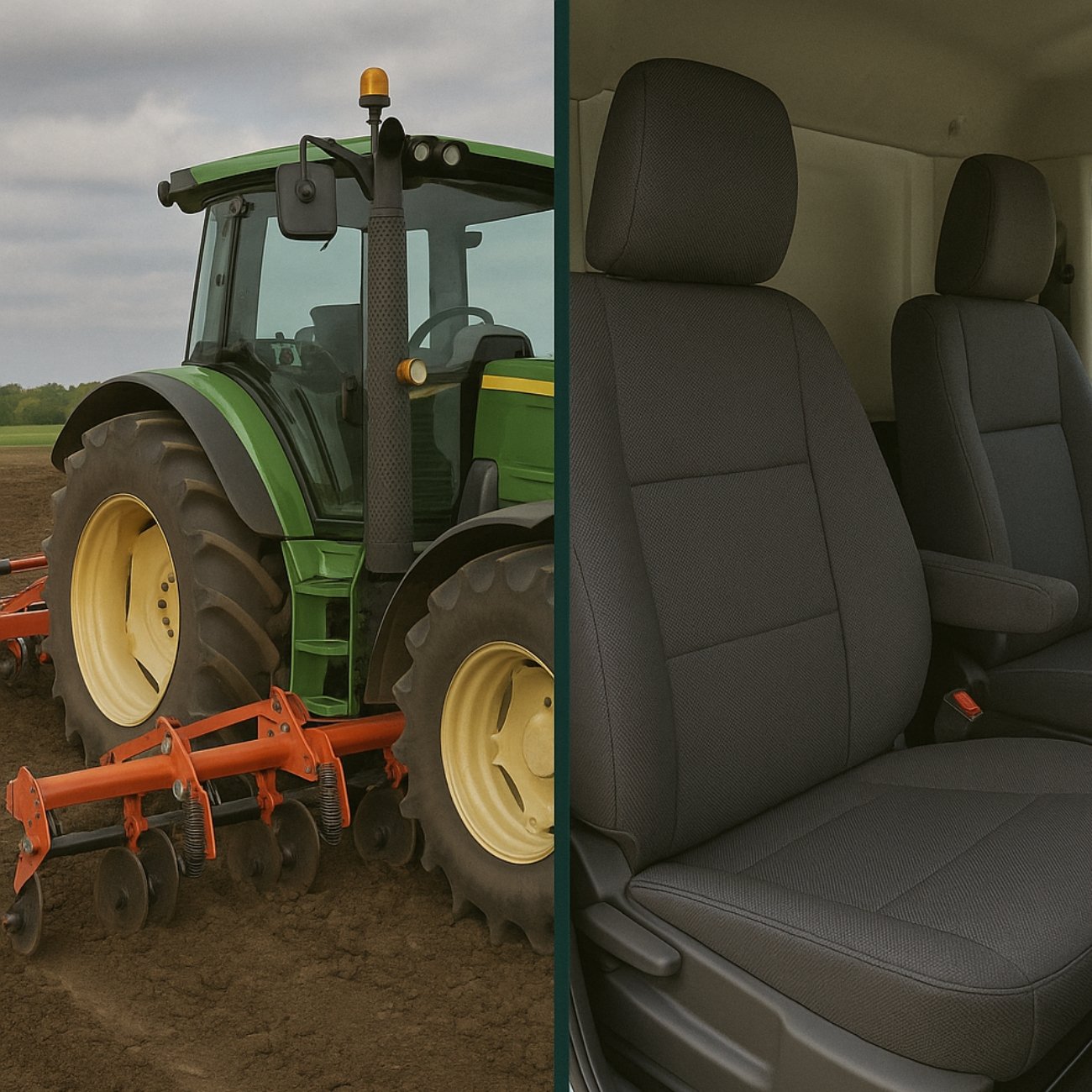

Heavy equipment seat covers in South Africa help protect operator seats from dust, dirt, friction and long shifts on tough sites. Loaders, excavators, graders, dump trucks, dozers and compaction equipment all have different seat layouts and working conditions. A suitable cover should be matched to the actual machine and its daily use. Heavy equipment seat covers should also preserve access to adjustment controls and seat belts.
Why heavy equipment seats need protection
Operators often climb in and out with dusty workwear, share machines across shifts and spend long periods seated in a vibrating cab. Dust and site contamination can settle into upholstery, while constant movement wears seat edges and bolsters. An interior can look neglected even when the equipment is mechanically sound, and inconsistent protection across a fleet makes maintenance harder to manage.
Seat covers protect upholstery, but they do not replace correct seat selection, adjustment or equipment maintenance. The NIOSH guidance on heavy earthmoving machinery ergonomics discusses seat design and vibration management for operators.
A fitted seat cover provides a practical layer over serviceable upholstery and can make routine cabin cleaning easier. It is one part of equipment care, alongside suitable cleaning and regular maintenance. Choosing a cover before the original seat is badly worn can also avoid the cost and downtime of later repair or replacement.
Choosing seat covers for loaders, excavators and graders
The right material depends on how the machine works. Consider abrasive dust, mud, moisture, grease, sun exposure, operator turnover and the cleaning routine. Tell the supplier whether the seat is used by one operator or shared across shifts, and whether quick wipe-downs are important between jobs.
- Site conditions: describe the amount of dust, mud and grease reaching the cab.
- Daily use: explain typical shift length and how often operators enter and exit.
- Cleaning routine: ask which cleaning methods suit the material and what to avoid.
- Mixed fleets: note which machines need covers so fit and material can be considered consistently.
Custom-fit heavy equipment seat covers
Seat designs differ across makes, models and years. Some have suspension bases, armrests, headrests, integrated controls or unique contours. A cover should be specified against the seat itself rather than selected only by equipment type. A closer fit helps reduce loose fabric and bunching during regular use and keeps the operator area looking orderly.
For a fit assessment, share the machine make, model and year, plus clear photographs of the seat from the front, sides and rear. Include armrests, controls, belts and suspension features in the photographs. Any safety belt, adjustment control or required access point must remain clear and usable after fitment.
Support equipment care and fleet presentation
Clean, well-protected interiors help teams maintain a consistent standard across expensive machinery. Plant operators, workshop staff, site managers and procurement teams can include seat covers in broader fleet-care planning. For businesses running different machines, the fit and workload should guide each selection instead of assuming one universal cover will work for every seat.
Stealth Seat Covers serves customers across South Africa, with fitment based in Polokwane, Limpopo. If the equipment is at another site, include its location when enquiring to discuss ordering and fitment arrangements.
Frequently asked questions
Are custom seat covers worth it for commercial vehicles?
Commercial vehicles and equipment often experience more wear than private vehicles because they see repeated use, dirt and frequent entry and exit. A suitable custom-fit cover helps protect the original seat, makes the cabin easier to keep clean and supports a tidier interior.
Which material is best for hard daily use?
The best choice depends on the actual workload. Some machines need a durable, easy-clean finish; dirt-heavy or high-friction work may call for a tougher option. Share the job conditions and cleaning routine so the material can be matched to the use.
Can seat covers help a fleet look more professional?
Yes. A clean, well-fitted interior supports a consistent appearance across machines and vehicles. On commercial equipment, cabin condition reflects the care given to the wider fleet.
Why does custom fit matter more than cheap universal covers?
Custom-fit covers are patterned for the actual seat, helping them sit more securely and look neater. Universal covers can shift or bunch, particularly under repeated heavy use.
Ask about heavy equipment seat covers
For pricing and fitment, share the equipment make, model, year, seat photographs, work conditions and site location. Contact Stealth Seat Covers for a custom equipment seat-cover enquiry.